From: The New York Times <nytdirect@nytimes.com> Date: November 2, 2023 at 1:24:26 PM EDT To: peteandtess@gmail.com Subject:Climate: Less pollution, more global warming Reply-To: nytdirect@nytimes.com
Climate: Less pollution, more global warming
As we clean up the air, we also seem to making global warming a bit worse.
Some good news: The air we breathe has been getting cleaner.
Across the globe and for many years now, air quality has been improving thanks to regulations that have dramatically reduced the release of pollutants that are harmful to human health.
But there's a catch. Some of the particulate matter in all that pollution was actually exerting a cooling effect on the climate by blocking solar radiation. In doing so, it was effectively preventing some of the global warming driven by the burning of fossil fuels.
Scientists are now taking a closer look at this trade-off and arriving at a sobering conclusion: As we clean up the air, we also seem to making global warming a bit worse.
Cleaner air means healthier people
Before we examine the trade-offs, let's acknowledge the obvious: Less pollution is a good thing.
Particulate matter — stuff like soot and sulfates, much of which comes from burning fossil fuels but also from forest fires and other sources — contributes to more than 4 million early deaths per year, according to the World Health Organization. The tiny particles can become lodged in the lungs and even enter the bloodstream, causing problems in the heart and beyond.
"There is absolutely no doubt that we would be all better off in the short term if we didn't have to breathe in as many dangerous aerosols," said Daniele Visioni, an assistant professor at Cornell University who has studied the relationship between air pollution and climate change. "From a health perspective, it makes sense to reduce pollutants."
The Clean Air Act has gone a long way toward improving air quality in the United States. A wide range of dangerous pollutants have fallen sharply since 1990, according to the Environmental Protection Agency.
More such regulations are on the way. This year, the Biden administration proposed tighter limits on fine particulate matter such as soot from smokestacks, power plants and other industrial activity. Those measures may help counteract the worsening air quality caused by wildfire smoke.
And other countries, including China, have also begun cracking down on pollution, leading to global improvements in air quality over the past decade.
Pollution that prevents warming
But as air pollution falls, so too does the concentration of that particulate matter that happened to be deflecting a not-inconsiderable amount of solar radiation.
One striking example is currently playing out on the high seas. In 2020, a new rule went into effect that sharply limited the amount of sulfur dioxide in shipping fuel. It substantially reduced air pollution, according to research by NASA.
Yet it appears that the reduction in particulate matter is also letting more solar radiation in, contributing to global warming. An analysis by Carbon Brief estimated that the regulations will be responsible for increasing global temperatures by .05 degrees Celsius by 2050.
That alone is not enough to explain the record high temperatures that have baked the globe this year. But scientists know it's a factor, and every fraction of a degree counts. "We know that there's an effect, but nobody has properly quantified it yet," Visioni said.
As my colleague Ray Zhong wrote, "reducing air pollution in the coming years would remove the cooling influence by a larger amount — good for lungs, bad for global warming."
Of course, there's a simple solution that would reduce pollution and drastically curtail global warming: Stop burning fossil fuels. That would make the mitigating effect of particulate matter irrelevant.
"The main way in which we could remove these sulfate emissions would be by stopped burning coal," Visioni said. "Getting rid of that would be a massive win for a thousand reasons."
Accelerating warming?
On Thursday morning, James Hansen, the pioneering climate scientist who first warned congress about global warming in 1988, presented additional new research that he said showed that the pace of warming was accelerating, and that the drastic reductions in particulate matter pollution were a cause.
"Humanity made a Faustian bargain by offsetting a substantial but uncertain fraction of greenhouse gas warming with aerosol cooling," Hansen said in a webinar. "Now, as we want to reduce all the chronic health effects of aerosols, our first payment is due. The payment is acceleration of global warming."
The Mississippi River approached record low levels in Missouri last year.Jeff Roberson/Associated Press
Water regulation in the U.S. is a mess
America's stewardship of groundwater, one of it most precious resources, relies on a lax and outdated patchwork of state and local rules. In many places, oversight is all but nonexistent, a New York Times analysis has found.
The majority of states don't know how many wells they have. Many have incomplete records or no records at all and don't register the millions of household wells that dot the country.
Even states that do try to count wells or regulate groundwater use often have other problems. Some carve out exemptions for powerful industries like agriculture, one of the nation's biggest users of groundwater. And every state relies to some extent on well owners self-reporting their water use, raising the risk of deception by users big and small.
Regulations in some states, including Oklahoma, are guided by a principle of letting users extract groundwater at rates that exceed an aquifer's ability to recharge. Some hydrologists call it groundwater "mining."
Nationwide, the jumble of regulations that The Times identified has fed an industry of lawyers and consultants who help big users follow the rules, and also, sometimes, to take advantage of them. "People are shopping around for where they can exploit groundwater," said Reba Epler, a lawyer who works on water rights cases in Wyoming and New Mexico. — Dionne Searcey and Delger Erdenesanaa
Dorset, England, on Thursday. The British Coast Guard warned people to "stay away from the water's edge."Finnbarr Webster/Getty Images
The weather report: Ciarán lashes France and the U.K.
A storm that battered northwestern France overnight was lashing Britain on Thursday with heavy rains and strong winds that the country's weather agency warned could pose a "danger to life."
With the storm moving north, Britain's weather agency issued an "amber warning," its second-highest level of alert, for parts of southern England, saying that winds were expected to exceed 85 miles per hour in some areas. The Coastguard warned people to "stay away from the water's edge," and the Port of Dover temporarily suspended "all sailings" because of the adverse conditions.
In southwestern England, photos showed large waves crashing into the shore in Devon and downed trees blocking roads in Falmouth. The highway authorities in Kent, in southeastern England, said that numerous roads were closed because of fallen trees. — Cassandra Vinograd
You received this email because you signed up for Climate Forward from The New York Times.
To stop receiving Climate Forward, unsubscribe. To opt out of other promotional emails from The Times, including those regarding The Athletic, manage your email settings. To opt out of updates and offers sent from The Athletic, submit a request.
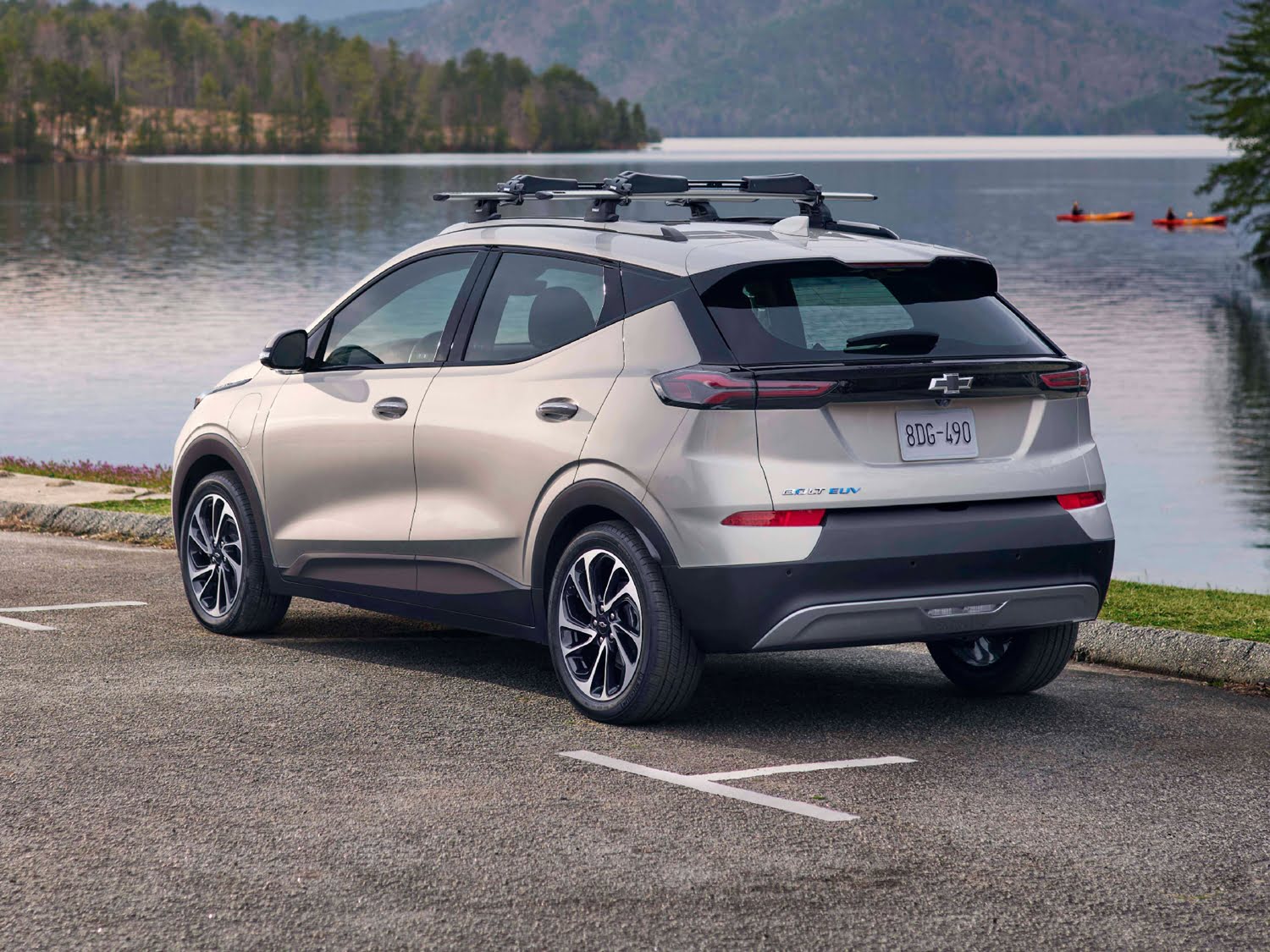
Chevy Bolt family sales increased in the United States, Canada, Mexico, and Brazil, but decreased in South Korea during the third quarter of 2023, while recording 37 deliveries in Colombia. As a reminder, the Bolt family includes the Chevy Bolt EV and the slightly larger Chevy Bolt EUV, though GM offers only one of the two models in some markets.
Chevy Bolt Sales – Q3 2023 – United States
Cumulative deliveries of the Chevy Bolt family in the United States increased to 15,835 units in Q3 2023, comprised of:
7,042 units of the Bolt EV compared to 3,530 units sold in Q3 2022 and
8,793 units of the Bolt EUV compared to 11,179 units sold in Q3 2022
Sales Numbers - Chevy Bolt - Q3 2023 - USA
MODEL
Q3 23 / Q3 22
Q3 23
Q3 22
YTD 23 / YTD 22
YTD 23
YTD 22
BOLT EV
+99.49%
7,042
3,530
+214.38%
19,375
6,163
BOLT EUV
-21.34%
8,793
11,179
+90.04%
30,119
15,849
TOTAL
+7.66%
15,835
14,709
+124.85%
49,494
22,012
Chevy Bolt Sales – Q3 2023 – Canada
Deliveries of the Chevy Bolt EV and EUV in Canada increased to 4,086 units in Q3 2023 compared to 3,130 units in Q3 2022. Sales of both the Bolt EV and EUV are reported on the same line item in Canada.
Sales Numbers - Chevy Bolt - Q3 2023 - Canada
MODEL
Q3 23 / Q3 22
Q3 23
Q3 22
YTD 23 / YTD 22
YTD 23
YTD 22
BOLT EV
+30.54%
4,086
3,130
+150.79%
10,957
4,369
TOTAL
+30.54%
4,086
3,130
+150.79%
10,957
4,369
Chevy Bolt Sales – Q3 2023 – Mexico
There were 34 deliveries of the Chevy Bolt EUV in Mexico during Q3 2023 compared to 17 units in Q3 2022. The Bolt EV is not sold in Mexico.
Sales Numbers - Chevy Bolt - Q3 2023 - Mexico
MODEL
Q3 23 / Q3 22
Q3 23
Q3 22
YTD 23 / YTD 22
YTD 23
YTD 22
BOLT EUV
+100.00%
34
17
+191.43%
102
35
TOTAL
+100.00%
34
17
+191.43%
102
35
Chevy Bolt Sales – Q3 2023 – Brazil
There were 23 deliveries of the Chevy Bolt EV in Brazil during Q3 2023 compared to 3 units in Q3 2022. The Bolt EUV is not sold in Brazil.
Sales Numbers - Chevy Bolt - Q3 2023 - Brazil
MODEL
Q3 23 / Q3 22
Q3 23
Q3 22
YTD 23 / YTD 22
YTD 23
YTD 22
BOLT EV
+666.67%
23
3
+975.00%
43
4
TOTAL
+666.67%
23
3
+975.00%
43
4
Chevy Bolt Sales – Q3 2023 – Colombia
There were 37 deliveries of the Chevy Bolt EUV in Colombia during Q3 2023. The Bolt EV is not sold in Colombia.
Sales Numbers - Chevy Bolt - Q3 2023 - Colombia
MODEL
Q3 23 / Q3 22
Q3 23
Q3 22
YTD 23 / YTD 22
YTD 23
YTD 22
BOLT EUV
*
37
*
*
100
0
TOTAL
*
37
*
*
100
0
Chevy Bolt Sales – Q3 2023 – South Korea
Cumulative deliveries of the Chevy Bolt family in the South Korea decreased to 932 units in Q3 2023, comprised of:
97 units of the Bolt EV compared to 437 units sold in Q3 2022 and
835 units of the Bolt EUV compared to 870 units sold in Q3 2022
Sales Numbers - Chevy Bolt - Q3 2023 - South Korea
MODEL
Q3 23 / Q3 22
Q3 23
Q3 22
YTD 23 / YTD 22
YTD 23
YTD 22
BOLT EV
-77.80%
97
437
-51.49%
212
437
BOLT EUV
-4.02%
835
870
+53.84%
1,463
951
TOTAL
-28.69%
932
1,307
+20.68%
1,675
1,388
Competitive Sales Comparison (USA)
Chevy Bolt family sales continued a year-long upward trajectory during the third quarter of 2023, though it was tempered this time around by competitors gaining traction in the growing mainstream EV segment. Bolt family sales grew just eight percent to 15,835 units for a 21 percent segment share to account for over a fifth of all deliveries, enabling the Bolts to continue leading this nascent but growing space.
On an individual basis, the Bolt EV (see running Bolt EV sales) placed fifth with a 21 percent sales drop to 8,793 units, while the Bolt EUV (see running Bolt EUV sales) took fourth with a 99 percent jump to 7,042 units. The Ford Mustang Mach-E (see running Ford Mustang Mach-E sales) took first place with a 43 percent bump to 14,842 units. The Hyundai Ioniq 5 crossover followed in second with a 143 percent leap to 11,665 units, while the Volkswagen ID.4 placed third with a 61 percent jump to 10,707 units. The Kia EV6, the Ioniq 5's corporate cousin and platform mate, placed sixth with a 30 percent swell to 6,470 units, while the Hyundai Ioniq 6 sedan took seventh with 5,073 deliveries. The Nissan Ariya placed eighth with 4,504 deliveries. The Subaru Solterra followed in ninth with 2,791 deliveries, while the related Toyota bZ4X was 10th with 1,896 units. These two crossovers were developed jointly, sharing the same platform. Nissan's other entry in the space, the dated Leaf, finished last with 1,570 deliveries.
Sales Numbers - Mainstream EV Passenger Cars - Q3 2023 - USA
MODEL
Q3 23 / Q3 22
Q3 23
Q3 22
Q3 23 SHARE
Q3 22 SHARE
YTD 23 / YTD 22
YTD 23
YTD 22
FORD MUSTANG MACH-E
+42.52%
14,842
10,414
20%
24%
+2.82%
28,882
28,089
HYUNDAI IONIQ 5
+143.02%
11,665
4,800
15%
11%
+36.85%
25,306
18,492
VOLKSWAGEN ID.4
+60.84%
10,707
6,657
14%
16%
+145.26%
27,155
11,072
CHEVROLET BOLT EUV
-21.34%
8,793
11,179
12%
26%
+90.04%
30,119
15,849
CHEVROLET BOLT EV
+99.49%
7,042
3,530
9%
8%
+214.38%
19,375
6,163
KIA EV6
+29.50%
6,470
4,996
9%
12%
-15.75%
14,798
17,564
HYUNDAI IONIQ 6
*
5,073
*
7%
0%
*
8,318
0
NISSAN ARIYA
*
4,504
*
6%
0%
*
9,699
0
SUBARU SOLTERRA
*
2,791
*
4%
0%
*
5,763
0
TOYOTA BZ4X
*
1,896
0
3%
0%
+2,695.69%
6,486
232
NISSAN LEAF
+23.04%
1,570
1,276
2%
3%
-34.77%
5,804
8,898
TOTAL
+75.84%
75,353
42,852
+70.84%
181,705
106,359
From a segment share standpoint, the Bolt EUV earned a 12 percent share, while the Bolt EV posted a nine percent share, for a combined 21 percent segment share. The Mustang Mach-E held a 20 percent share, while the Ioniq 5 and ID.4 posted shares of 15 and 14 percent, respectively. The EV6 earned a nine percent share and the Ioniq 6 posted a seven percent share. The Ariya held a six percent share, the Solterra a four percent share, the bZ4X a three percent share, and the Leaf a two percent share.
The mainstream EV segment accounted for 75,353 deliveries during Q3 2023, growing a very healthy 76 percent year-over-year, meaning that Bolt family sales significantly underperformed the segment average.
The GM Authority Take
The good news is that Chevy Bolt family sales continued to lead the segment in Q3 2023 with a 21 percent share. The not so great news is that this was just barely enough to remain in the lead, as the Ford Mustang Mach-E earned a 20 percent segment share and was within 1K deliveries of the Bolt duo, while competitors made inroads, with sales increasing across the board. The performance marks more than a year of Bolt sales leadership in the mainstream EV segment, a space that now consists of 11 models.
Previously, we've posited that Bolt sales will continue their solid trend as demand for the models is high and supply is the primary limiting factor, though that may be tempered somewhat with this latest showing by competitors. However, the Chevy Bolt EV and Bolt EUV are showing strong conquest sales. According to General Motors, 70 percent of Bolt EV and Bolt EUV buyers are trading in a non-GM vehicle, with the top three competitor trade-ins including Toyota, Nissan, and Honda.
We believe that sales will slide substantially in the short term as the Bolts are discontinued, but we fully expect them to bounce back once the next-gen Bolt launches.
Last fall, the Chevy Bolt EUV received top marks from the National Highway Traffic Safety Administration (NHTSA), specifically a five-star Overall Safety Rating, the highest score awarded by the agency.
Both the Bolt EV and Bolt EUV ride on the GM BEV2 platform and utilize the same single-drive electric motor, which produces 200 horsepower and 266 pound-feet of torque, driving the front wheels. It's fed by a 65 kWh lithium-ion battery, which provides 259 miles of range per charge for the Bolt EV and 247 miles for the Bolt EUV.
"Another key launch for us is the next-generation Chevrolet Bolt EV. I know there's been some speculation in the market as to why we are developing a new Bolt EV. Our strategy is to build on the tremendous equity we have in the brand, and to do it as efficiently as possible," Barra said. "Our prior portfolio plans included several newly designed vehicles in the entry-level segment and a capital commitment of $5 billion over the next several years."
Barra went on to state that the upcoming Chevy Bolt models will utilize GM's latest Ultium technology, its latest software, and the North American Charging Standard, or NACS, a charger type originally developed by Tesla. GM announced it would adopt NACS last June, with plans to integrate it into new GM EVs starting in 2025.
"In the process, we are saving billions in capital and engineering expense, delivering a significantly cost-improved battery pack using purchased LFP cells, we're getting to market at least two years faster, and our unit costs will be substantially lower," Barra added. "This will be our first employment in North America of LFP technology in the Ultium platform."
Chevy EV Lineup: Bolt EUV, Equinox EV, and Blazer EV